
25% below the divinemedicinals.com list
Full Body
Detox.
Twenty days. Six herbal formulas plus food-grade activated charcoal, taken two to three hours apart.
Fast Shipping! Orders Ship Within 24-48 Hours!Flat $10 shipping in the US


Capsules.
Six herbal formulas, 100 vegan capsules each, plus food-grade activated charcoal. Everything for the twenty-day program.
- Per formula100 vegan capsules
- In the box6 formulas + activated charcoal
- Per dose5 capsules with 8 oz water
Liquid.
The same six formulas as 2 fl oz liquid extracts in vegetable glycerin, plus food-grade activated charcoal.
- Per formula2 fl oz (59 mL) dropper bottle
- In the box6 formulas + activated charcoal
- Per dose1 to 2 dropper squeezes
Everything Full Body Detox.
Every Full Body Detox product from Divine Medicinals, 25% below the list price.
Full Body Detox Capsules
Six herbal formulas, 100 vegan capsules each, plus food-grade activated charcoal. Everything for the twenty-day program.
5.0 (10 reviews) Write a review- Per formula100 vegan capsules
- In the box6 formulas + activated charcoal
- Per dose5 capsules with 8 oz water
Full Body Detox Liquid
The same six formulas as 2 fl oz liquid extracts in vegetable glycerin, plus food-grade activated charcoal.
5.0 (4 reviews) Write a review- Per formula2 fl oz (59 mL) dropper bottle
- In the box6 formulas + activated charcoal
- Per dose1 to 2 dropper squeezes

Children's Full Body Detox Liquid
The children's version of the Full Body Detox: four liquid formulas for a four-to-seven-day program, taken two to three hours apart.
5.0 (1 review) Write a review- In the box4 formulas, 2 fl oz each
- Program4 to 7 days
- Per dose1 to 2 dropper squeezes in 2 oz of water

Full Body Detox Loose Tea
The companion tea for tea drinkers doing the cleanse, and a good tea for the days after it. Two ounces of cut-and-sifted loose leaf.
Be the first to review- Net weight2 oz (56 g)
- Per cup1 tablespoon, 7 minutes
- MakesAbout 2 cups per quart

Full Body Detox Bath Drops
An essential-oil blend for the bath during the cleanse: three to five drops in the tub, swirled through the water. External use only.
Be the first to review- Size15 mL (0.5 fl oz)
- Per bath3 to 5 drops
- UseExternal only

Full Body Detox Skin Clay
A clay mask for the skin during the cleanse: bentonite and green zeolite clay with activated charcoal from coconut, mixed with water and used after cleansing the skin. External use only.
Be the first to review- Net weight4 oz (113 g)
- Mix1 part clay to 1 part water
- Leave on7 to 12 minutes
FBD Cleanse: Buy 3, Get 1 Free
Add four twenty-day cleanse kits to your cart, in any mix of Capsules and Liquid, and the fourth one comes off free at checkout.
No code needed. The lowest-priced of the four comes off in the cart.
Free 30-Minute Health Consultation
Every order comes with a free thirty-minute health consultation with Djehuty Ma'at-Ra, the master herbalist who formulated the Full Body Detox in 1999.
How to book arrives with your order confirmation email. Valid on orders placed through November 2, 2026.
Nothing but the herbs.

No fillers, no binders, no preservatives. Six formulas and food-grade charcoal, and that is the whole list.

Six formulas taken two to three hours apart, from morning to bedtime.

Formulated by master herbalist Djehuty Ma'at-Ra and still the cleanse the others copy.
- 100% plant-based (vegan)
- Non-GMO
- Gluten-free
- No fillers, binders or excipients
- No preservatives or additives
- Free of soy, corn and nuts
Six formulas, taken in order, two to three hours apart.
Tap a formula to see its herbs and dose.
Start Formula 1 whenever your day begins and move through the day in order.


Blood and Lymph Formula
Blood and lymphatic system
Fifteen botanicals · choose one to read about it
 Alfalfa leafMedicago sativa
The name traveled from the Arabic al-fasfasa through Spanish, while British agriculture kept the older term lucerne. Medicago sativa is a deep-rooted perennial legume with trifoliate leaves, small violet flowers and seed pods wound into tight spirals. It is among the oldest of all cultivated forage crops, described by classical Roman writers who recorded its arrival in the Mediterranean from Persia.
 Burdock rootArctium lappa
Arctium lappa carries two grasping names: arktos, Greek for bear, and lappa, from a root meaning to seize. Its burrs, hooked bracts surrounding a purple thistle-like flower head, caught on a Swiss engineer's dog in 1941 and gave him the idea for Velcro. Beneath the enormous rhubarb-like leaves sits a slender taproot that can run more than a meter down, and which is cultivated as the vegetable gobo in Japan.
 Yellow Dock rootRumex crispus
Rumex crispus takes both its epithet and its English name, curled dock, from the wavy crimped margins of its long lance-shaped leaves. The taproot is a startling yellow-orange in cross-section, which is where the trade name yellow dock comes from. A Eurasian native, it now stands in disturbed ground on six continents and is recognizable through winter by its rust-brown spires of dried seed.
 Dandelion rootTaraxacum officinale
The English name is a corruption of the French dent de lion, lion's tooth, for the jagged leaf margins, while the genus name Taraxacum reaches back through medieval Latin to an older Arabic and Persian name for the plant. Taraxacum is botanically peculiar: most of its populations set seed without fertilization, producing thousands of near-identical microspecies that taxonomists still argue over. The part taken here is the taproot, thick and pale, lifted once the top growth has died back.
 Chickweed leafStellaria media
Stellaria takes its name from the Latin stella: the tiny white flowers have five petals so deeply cleft that they read as ten points of a star. A reliable field mark is the single line of fine hairs running up one side of the stem and switching sides at each node. It is a plant of extraordinary persistence, flowering in almost any month of the year and turning up wherever ground has been broken.
 Red Clover topsTrifolium pratense
Trifolium pratense, the clover of the meadow, traveled out of Europe with pasture seed until it became a fixture of farmland worldwide, and Vermont eventually made it a state emblem. Its rose-purple heads sit on a corolla tube long enough that only long-tongued bumblebees can reach the base, a relationship Darwin used as his textbook example of ecological interdependence. The portion gathered is the flowering top, cut with the uppermost pair of leaves and their pale crescent markings.
 Nettle leafUrtica dioica
Urtica comes from the Latin urere, to burn, and dioica means two households, since male and female flowers grow on separate plants. Stem and leaf alike are armed with fine silica-tipped hairs, each one a miniature glass pipette that snaps off at the lightest contact. The same stems yield a strong bast fiber that was woven into cloth across northern Europe for centuries and was pressed into service for German army uniforms during the First World War.
 Sarsaparilla rootSmilax ornata
Listed under a traditional trade name: sarsaparilla in commerce covers several tropical American climbers of the genus Smilax, most often Smilax ornata and the closely allied S. regelii. The name is Spanish, from zarza, a bramble, with parrilla, a little vine, which describes a prickly tendrilled liana that hauls itself up through forest canopy. The part gathered is the long fibrous root system that runs out from a knotted underground crown, and it is not related to the wild sarsaparilla of North American woodlands, which is an Aralia.
 Oregon Grape rootMahonia aquifolium (syn. Berberis aquifolium)
Collected by the Lewis and Clark expedition in 1806 and later named for Bernard McMahon, the Philadelphia nurseryman entrusted with their seed, it is now the state flower of Oregon. The epithet aquifolium means holly-leaved, and the spiny evergreen leaflets do look the part, though the dusty blue fruit is a berry and no relation to a grape. Cut the root and the wood beneath the bark is a vivid sulfur yellow.
 Echinacea angustifolia rootEchinacea angustifolia
Echinacea comes from the Greek echinos, hedgehog or sea urchin, for the stiff spines of the central cone; angustifolia, narrow-leaved, distinguishes it from its broader-leaved relatives. It is a plant of hard, dry prairie ground, ranging from Saskatchewan south through the Great Plains into Texas, anchored by a dark taproot that goes remarkably deep. The Eclectic pharmacists of Cincinnati cataloged it exhaustively through the 1890s, making it one of the most written-about American plants of its era.
 Devil's Claw rootHarpagophytum procumbens
Harpagophytum means grappling-hook plant, and the fruit earns the name: a woody capsule armed with curved, barbed arms that lock into the hooves of passing animals and are carried across the veld. It is a trailing perennial of deep Kalahari sand, throwing up trumpet-shaped violet flowers after rain and dying back to nothing in the dry season. What is collected is not the primary root but the secondary storage tubers strung along it, sliced and dried in the sun.
 Cayenne fruitCapsicum annuum
Capsicum annuum was domesticated in Mexico several thousand years ago and spread through Asia and Africa within a century of Portuguese and Spanish trade contact, so thoroughly that many cuisines now regard it as indigenous. The name is thought to descend from the Tupi word kyynha, later attached to Cayenne in French Guiana. The fruit is botanically a berry, and its pungency is measured on the scale devised by the pharmacist Wilbur Scoville in 1912.
 Chaparral leafLarrea tridentata
Listed under a folk trade name: chaparral properly describes a Californian shrubland type, while the plant itself is Larrea tridentata, the creosote bush, named in honor of the Spanish patron of science Juan Antonio Hernandez de Larrea. Its small paired leaflets are varnished in a hard resin, which is the source of the distinctive smell that rises off the desert after rain. A clonal ring of it in the Mojave, known as King Clone, has been dated to roughly 11,700 years, placing it among the oldest known living organisms.
 CeladineChelidonium majus
Listed under a variant spelling of celandine, a name shared by two unrelated plants; in herbal formulas of this kind it denotes greater celandine, Chelidonium majus, of the poppy family, rather than the lesser celandine of the buttercups. Chelidonium derives from chelidon, the Greek for swallow, and Pliny recorded the belief that it opened its flowers as the swallows returned and faded as they left. Break a stem and it releases a vivid orange latex, the clearest mark of its poppy kinship.
 Goldenseal rootHydrastis canadensis
Hydrastis canadensis grows in the deep shade of eastern North American hardwood forest, from the Ohio Valley through the southern Appalachians. What the trade calls the root is properly a rhizome, knuckled and brilliant yellow inside; the seal of the name is the round scar left where each year's stem breaks away, resembling wax pressed on a document. Decades of wild collection led to its listing on CITES Appendix II in 1997, and most commercial material is now grown under shade.


Cardiovascular (Heart) Formula
Heart, cardio and vascular
Fourteen botanicals · choose one to read about it
 Hawthorn berriesCrataegus monogyna
The genus name joins the Greek kratos, strength, and akis, a sharp point, which fairly describes a small tree of iron-hard wood and long thorns. The English name is older still: haga was the Old English word for a hedge, since the tree was planted in lines to enclose fields, and its fruit is still called a haw. Berries in commerce come mainly from C. monogyna and the closely related C. laevigata, two European species that hybridise freely where they meet.
 Ginseng rootPanax ginseng
The name comes from the Chinese renshen, roughly man root, for the forked, limbed shape a mature specimen takes underground. It was described to European readers in 1711 by the Jesuit Pierre Jartoux, who had watched it collected in Manchuria; a fellow Jesuit, Joseph-Francois Lafitau, found a close relative growing near Montreal five years later, and a transatlantic trade to Canton followed. Asian ginseng (Panax ginseng) and American ginseng (P. quinquefolius) are distinct species sold under the single trade name.
 Blessed Thistle leafCnicus benedictus (syn. Centaurea benedicta)
An annual of dry Mediterranean ground, sprawling rather than standing, with spiny, deeply lobed leaves marked by pale veining and yellow flowerheads sunk in a cage of woolly, hooked bracts. The epithet benedictus, blessed, dates from the medieval monastery gardens where the plant was grown across Europe. Shakespeare names it, as Carduus Benedictus, in Much Ado About Nothing, a sign of how familiar it was to an Elizabethan audience.
 Cinnamon barkCinnamomum verum (syn. C. zeylanicum)
True cinnamon is the inner bark of a Sri Lankan laurel, cut from coppiced shoots, scraped and left to dry, whereupon it curls on itself into the quills sold in trade. The Greek kinnamomon reached Europe through Phoenician merchants along with tall stories about its source; Herodotus reported that giant birds gathered the sticks for their cliff nests. Much of the world's cinnamon is now the thicker bark of the related Cinnamomum cassia, while C. verum is the Ceylon species.
 Ginger rootZingiber officinale
Ginger has never been found growing wild. It is a cultigen, carried out of island Southeast Asia by Austronesian voyagers and long established in India and China before it reached the Mediterranean, and the word traveled the same way: Sanskrit shringavera, from a root meaning horn or antler, became Greek zingiberis and then Latin zingiber. What is sold as the root is properly a rhizome, an underground stem that branches into the flat, finger-like hands of the market.
- Cayenne fruitCapsicum annuum
Capsicum annuum was domesticated in Mexico several thousand years ago and spread through Asia and Africa within a century of Portuguese and Spanish trade contact, so thoroughly that many cuisines now regard it as indigenous. The name is thought to descend from the Tupi word kyynha, later attached to Cayenne in French Guiana. The fruit is botanically a berry, and its pungency is measured on the scale devised by the pharmacist Wilbur Scoville in 1912.
 Gingko Biloba leafGinkgo biloba
The ginkgo is the sole surviving species of an entire order of seed plants whose fossil relatives are spread through the Jurassic, which leaves it with no close living relatives at all. Its fan-shaped leaf, split by a central notch into two lobes, gives the epithet biloba. The genus name is an accident of transcription: Engelbert Kaempfer recorded the Japanese ginkyo, silver apricot, in 1712 with an error that Linnaeus then preserved in print.
 Shepherd's Purse leafCapsella bursa-pastoris
Both names describe the seed pod, a flat triangular capsule notched at the top and held out on fine stalks up the stem, which medieval Europeans took for the leather pouch a shepherd carried: bursa pastoris in Latin. Probably originating around the eastern Mediterranean and Asia Minor, it now grows on waste and cultivated ground almost everywhere, making it one of the most widely distributed flowering plants on earth. In Japan it is nazuna, one of the seven herbs of spring, and its young leaves remain a vegetable in East Asian cooking.
 Green Tea leafCamellia sinensis
Green and black tea come from the same evergreen shrub; the difference is handling. Leaves picked for green tea are heated soon after harvest, steamed in Japan or pan-fired in China, which halts the oxidation that would otherwise darken them. The English word tea came by sea from the Min Chinese te, spoken at the port of Amoy where Dutch traders loaded it, while the overland routes carried the northern cha into Russian, Turkish and Hindi as chai.
 Chasque seedVitex agnus-castus
Listed under a variant spelling of a traditional trade name; this is the chaste tree, a Mediterranean shrub with gray-green palmate leaves and slender spikes of lilac flowers whose small dark fruits are the part traded as seed. Its botanical name is a linguistic knot: Greek agnos, the old name of the shrub, was confused with hagnos, meaning chaste, and the Latin castus then repeated the sense, so agnus-castus says the same thing twice. Vitex itself comes from a Latin verb meaning to weave, after the pliant stems that were used for basketwork.
 Butcher's Broom rootRuscus aculeatus
What look like leaves are not leaves at all: each stiff dark blade is a flattened stem, a cladode, tipped with a spine and carrying a tiny greenish flower on the middle of its upper face, followed by a single scarlet berry sitting in the same odd position. Bundles of the springy stems were once bound into brushes for scouring butchers' blocks, which is where the English name comes from. A low evergreen of Mediterranean woodland and dry banks, it is classed with asparagus rather than with the lilies where older books put it.
 Angelica rootAngelica archangelica
A stout biennial of the cold north, reaching two meters, with hollow ribbed stems and large domed umbels of green-white flowers. The name honors the archangel Michael, though accounts differ over whether it refers to the plant's flowering near his feast day or to a dream in which he named it. Icelandic and Sami people have long eaten the stems as a vegetable, candied stems still decorate cakes, and the root is a defining flavor in gin, vermouth and Chartreuse; the Chinese species A. sinensis is a separate plant traded under the same English word.
 Wahoo barkEuonymus atropurpureus
Wahoo is a Dakota word, wanhu, meaning arrow-wood, for a shrub of woodland edges and river banks from Ontario south to Texas. In autumn its leaves turn deep rose-purple and the four-lobed capsules split to show seeds wrapped in bright orange arils, a display that earned the genus its other English name, burning bush. Nineteenth-century American Eclectic physicians cataloged the bark extensively, and it appears throughout the herbals they published.
 Valley LilyConvallaria majalis
Listed here under an older English name for lily of the valley. Convallaria comes from the Latin convallis, a valley closed in by hills, and majalis means of May, the same month that names it in the German Maiglockchen, little May bells, and in the French custom of selling muguet on the first of the month. It spreads by rhizome through deciduous woodland, sending up paired broad ribbed leaves and an arching one-sided raceme of nodding white bells, followed in autumn by red berries.


Liver, Gallbladder and Spleen Formula
Liver, gallbladder and spleen
Fifteen botanicals · choose one to read about it
 Milk Thistle seedSilybum marianum
A stout thistle of Mediterranean waste ground, immediately recognizable by glossy leaves marbled with white along every vein — the marbling that gave the plant its common name and the epithet marianum, from a medieval legend attaching it to the Virgin Mary. What the trade calls seed is botanically an achene, a small hard fruit tipped with a parachute of fine bristles and threshed from the dried flower heads. The genus name descends from silybon, an ancient Greek word for thistle-like plants.
- Dandelion rootTaraxacum officinale
The English name is a corruption of the French dent de lion, lion's tooth, for the jagged leaf margins, while the genus name Taraxacum reaches back through medieval Latin to an older Arabic and Persian name for the plant. Taraxacum is botanically peculiar: most of its populations set seed without fertilization, producing thousands of near-identical microspecies that taxonomists still argue over. The part taken here is the taproot, thick and pale, lifted once the top growth has died back.
 Boldo leafPeumus boldus
Peumus boldus is the only species in its genus, endemic to the dry sclerophyll forest of central Chile and found growing wild almost nowhere else. Its leaves are thick, leathery and strongly aromatic, with a curiously bumpy upper surface and slightly inrolled edges; they are still gathered by hand from wild stands, which makes Chile effectively the world's sole source. The name comes from the Mapudungun word boldu, carried into Chilean Spanish and then into botanical Latin.
 Fenugreek seedTrigonella foenum-graecum
The botanical name means Greek hay — foenum graecum — a Roman label from the days when the plant was sown as fodder, while Trigonella, little triangle, describes the three-cornered outline of its small cream flower. It is an annual legume that carries its hard, angular ochre seeds in long slender curved pods, each seed grooved diagonally across one face. Fenugreek seeds have been recovered from Bronze Age deposits in Iraq and from the tomb of Tutankhamun.
 Gentian rootGentiana lutea
Pliny credited the name to Gentius, an Illyrian king of the second century BC, and it has stayed fixed to the genus ever since. Gentiana lutea is a long-lived perennial of alpine meadows in the Alps, Pyrenees and Balkans, throwing up a stem well over a meter tall hung with whorls of star-shaped yellow flowers; the thick root can sit underground for several years before the plant flowers at all. That root is what gives a number of long-established European liqueurs their distinctive bitter flavor.
 TurmericCurcuma longa
Curcuma longa is a sterile triploid that sets no viable seed and has never been found growing wild — every plant in cultivation descends by rhizome division from stock propagated in South Asia for thousands of years. The part taken is the underground rhizome, knobbly and buff-skinned outside and intensely orange within, usually boiled, dried and milled. The English name traces back to the Latin terra merita, deserving earth, while Curcuma arrives through the Arabic kurkum.
- Oregon Grape rootMahonia aquifolium (syn. Berberis aquifolium)
Collected by the Lewis and Clark expedition in 1806 and later named for Bernard McMahon, the Philadelphia nurseryman entrusted with their seed, it is now the state flower of Oregon. The epithet aquifolium means holly-leaved, and the spiny evergreen leaflets do look the part, though the dusty blue fruit is a berry and no relation to a grape. Cut the root and the wood beneath the bark is a vivid sulfur yellow.
 Barberry barkBerberis vulgaris
Berberis vulgaris is a spiny European hedgerow shrub whose three-pronged spines are modified leaves and whose inner bark and root wood are a startling chrome yellow, a color long taken up as a dye for leather and wool in Poland and Russia. Introduced to North America by early settlers, it later became the target of a federal eradication program begun in 1918 at the urging of the wheat-growing states, and millions of bushes were pulled from the grain belt. In Europe it still hangs its drooping racemes of yellow flowers over field edges, followed by oblong scarlet berries.
 Peony rootPaeonia lactiflora
Peonies are the sole genus of the family Paeoniaceae, filed for two centuries among the buttercups until botanists recognized the distinct structure of their flowers. Paeonia lactiflora was described by Peter Simon Pallas from the Russian expeditions into Siberia and Mongolia, its epithet meaning milk-flowered; the thick fleshy roots are lifted in autumn from plants of four years or more. Listed here by common name alone, which in the herb trade usually denotes this eastern species rather than the European P. officinalis.
 Quassia chipsQuassia amara
Linnaeus named this genus in 1762 for Graman Quassi, an African-born man in colonial Suriname, after specimens collected there by the planter Carl Gustaf Dahlberg reached him at Uppsala — one of very few botanical names of the period honoring a Black man. Quassia amara is a slender shrub or small tree with pinnate leaves carried on a conspicuously winged red stalk and long scarlet tubular flowers, and its pale wood is among the most bitter plant materials known. Chips sold under this trade name may come from this species or from the taller Jamaican tree Picrasma excelsa.
 BupleuremBupleurum chinense
Bupleurum is the great exception within the carrot family: its leaves are simple, undivided and parallel-veined, so the plant reads at a glance as a grass or a young bamboo until the small yellow-green umbels open. The genus name joins the Greek bous, ox, with pleuron, rib, for those strongly ribbed leaves, while the old English name thorowax — thorough-wax — belongs to a European relative whose stem appears to grow straight through the leaf. The name is listed in a variant spelling of Bupleurum; the root in commerce is most often B. chinense, described by the Swiss botanist Augustin Pyramus de Candolle.
 Fringetree barkChionanthus virginicus
A small tree of the olive family — kin to lilac and ash — growing along woodland edges and stream banks from New Jersey south to Texas. The genus name is Greek, chion, snow, and anthos, flower, for the drooping clouds of white blossom whose petals are drawn out into narrow ribbons; the same effect earned it the local names old man's beard and grancy graybeard. Eighteenth-century collectors shipped it across to English gardens, where it was grown purely as an ornamental.
- Goldenseal rootHydrastis canadensis
Hydrastis canadensis grows in the deep shade of eastern North American hardwood forest, from the Ohio Valley through the southern Appalachians. What the trade calls the root is properly a rhizome, knuckled and brilliant yellow inside; the seal of the name is the round scar left where each year's stem breaks away, resembling wax pressed on a document. Decades of wild collection led to its listing on CITES Appendix II in 1997, and most commercial material is now grown under shade.
 ToadflaxLinaria vulgaris
The name pairs flax-like foliage — Linaria comes from the Latin linum, flax — with a hinged, closed flower mouth that country observers likened to a toad; the same plant is called butter-and-eggs for its two-tone yellow and deep orange bloom. Linnaeus devoted a 1744 dissertation, Peloria, to a radially symmetrical mutant of this species found near Uppsala, a form that unsettled his conception of fixed species and is now understood as one of the first documented natural epigenetic mutations. A perennial of roadsides and dry open ground, it traveled to North America as a garden plant and stayed.
- Chaparral leafLarrea tridentata
Listed under a folk trade name: chaparral properly describes a Californian shrubland type, while the plant itself is Larrea tridentata, the creosote bush, named in honor of the Spanish patron of science Juan Antonio Hernandez de Larrea. Its small paired leaflets are varnished in a hard resin, which is the source of the distinctive smell that rises off the desert after rain. A clonal ring of it in the Mojave, known as King Clone, has been dated to roughly 11,700 years, placing it among the oldest known living organisms.


In the liquid: Milk Thistle seed, Dandelion root, Boldo leaf, Yellow Dock root, Fenugreek seed, Gentian root, Turmeric, Oregon Grape root, Barberry bark, Quassia chips, Bupleurem, Fringetree bark, and Goldenseal root in a base of vegetable glycerin and distilled water.
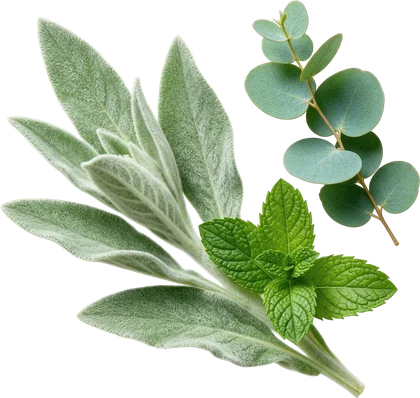


Lungs and Sinus (Respiratory) Formula
Lungs, sinus and respiratory
Fifteen botanicals · choose one to read about it
 Mullein leafVerbascum thapsus
A biennial that spends its first year as a flat rosette of thick, felted leaves and its second sending up a single unbranched flowering spike that can pass two meters. Native across Europe, northern Africa and Asia, it traveled to North America with early colonists and now stands on roadsides and disturbed ground across the continent. Older English names — hag's taper, candlewick plant — record the dried stalks being dipped in tallow and burned as torches.
 Licorice rootGlycyrrhiza glabra
The genus name is a straight Greek compound — glykys, sweet, and rhiza, root — and Theophrastus cataloged the plant in the third century BC under the name Scythian root. It is a deep-rooted perennial legume of the Mediterranean and western Asia, with pinnate leaves and pale violet pea flowers; the harvested part is the taproot and the spreading underground stolons, lifted after three or four years' growth. Its principal compound, glycyrrhizin, is many times sweeter than cane sugar, which is why the root has flavored confectionery from Pontefract to Calabria.
 EucalyptusEucalyptus globulus
Charles Louis L'Heritier de Brutelle coined the name in 1789 from the Greek eu, well, and kalyptos, covered, for the lid-like cap that seals the flower bud until the opening stamens push it off. The genus holds more than seven hundred species, nearly all Australian; listed by genus alone, the one intended in commerce is almost always the Tasmanian blue gum, Eucalyptus globulus. Its foliage is dimorphic — rounded, waxy blue juvenile leaves on young square-sectioned shoots, and long sickle-shaped adult leaves that hang edge-on to the sun.
 Coltsfoot leafTussilago farfara
The leaf is broad and hoof-shaped — the common name comes from its outline, said to resemble a colt's hoofprint — dark green above and white-felted beneath. The yellow flowerheads come first, on scaly reddish stalks early in the year, and the leaves follow after they have gone. Native to Europe and western Asia and long naturalized in North America.
 BonesetEupatorium perfoliatum
The epithet perfoliatum describes the plant exactly: each pair of long, wrinkled, tapering leaves is fused at the base, so the hairy stem appears to run straight through one continuous leaf. It grows in wet meadows, swamps and stream margins across eastern North America, carrying flat-topped clusters of small, fuzzy, dull-white flowers in late summer. The genus commemorates Mithridates VI Eupator, king of Pontus and a noted student of plants.
 LobeliaLobelia inflata
Listed by genus alone; Lobelia runs to some four hundred species, and the one meant here is Lobelia inflata, named for the seed capsules that swell into small papery bladders once the flowers fall. The genus itself commemorates Matthias de l'Obel (1538-1616), the Flemish botanist who ended his career as botanist to James I of England. A slender, branching annual of dry fields and clearings in eastern North America, it picked up the common name Indian tobacco in the early nineteenth century, though it is no relation of tobacco, which belongs to the nightshade family.
 PleurisyAsclepias tuberosa
Asclepias tuberosa is a milkweed of dry, open ground across eastern and southern North America, unusual in its family for a clear rather than milky sap and for flat-topped clusters of bright orange flowers that draw butterflies through midsummer. The root is the part used; the plant is listed here under the common name printed on the label.
 Slippery Elm barkUlmus rubra (syn. Ulmus fulva)
Ulmus rubra is a medium-sized elm of the eastern woodlands, distinguished from the American elm by leaves rough as sandpaper on both faces and by rusty-red hairs on the winter buds. Slippery describes the mucilaginous inner bark, peeled in spring when the sap is running; the timber trade calls the same tree red elm, for the color of that inner layer. That inner bark comes away in long fibrous sheets, a property that also made the tree a source of cordage in eastern North America.
 Yerba Santa leafEriodictyon californicum
Eriodictyon means "woolly net" in Greek, after the felted mesh of raised veins on the underside of each leaf; the upper surface, by contrast, is dark and varnished with resin. The Spanish name it still carries, yerba santa, was given to it by missionaries in California and has traveled with the plant ever since. It is a chaparral evergreen of dry slopes that resprouts from woody underground rhizomes after fire, and the long leathery leaves are stripped from standing plants.
- Fenugreek seedTrigonella foenum-graecum
The botanical name means Greek hay — foenum graecum — a Roman label from the days when the plant was sown as fodder, while Trigonella, little triangle, describes the three-cornered outline of its small cream flower. It is an annual legume that carries its hard, angular ochre seeds in long slender curved pods, each seed grooved diagonally across one face. Fenugreek seeds have been recovered from Bronze Age deposits in Iraq and from the tomb of Tutankhamun.
- Cayenne fruitCapsicum annuum
Capsicum annuum was domesticated in Mexico several thousand years ago and spread through Asia and Africa within a century of Portuguese and Spanish trade contact, so thoroughly that many cuisines now regard it as indigenous. The name is thought to descend from the Tupi word kyynha, later attached to Cayenne in French Guiana. The fruit is botanically a berry, and its pungency is measured on the scale devised by the pharmacist Wilbur Scoville in 1912.
 Peppermint leafMentha × piperita
Peppermint is not a species but a sterile hybrid of watermint and spearmint that appeared in English fields; Linnaeus described it in 1753 from Hertfordshire material, taking it for a species in its own right. Because it sets no viable seed it can only be increased by runners, so every plant in every field descends by division from earlier stock. Mitcham in Surrey gave its name to the classic English strain, and the center of cultivation later shifted to Michigan, Indiana and the Pacific Northwest.
 Thyme leafThymus vulgaris
Garden thyme is a low, woody-based subshrub of the western Mediterranean garrigue, the dry stony scrub where it grows among rosemary and lavender on thin limestone soils. The Greek thymon is usually traced to thyein, to burn as an offering, from the practice of laying aromatic branches on altar fires. It is cut at flowering, when the tiny gray-green leaves with their inrolled margins are most strongly scented, and it has been fixed in French cooking long enough to be one of the three constants of a bouquet garni.
 HyssopHyssopus officinalis
The English name travels back through Greek hyssopos to a Semitic root and is usually linked to the Hebrew ezov, though most scholars now identify the plant of the Hebrew Bible as a different Mediterranean species. Hyssopus officinalis itself is a compact, woody-based perennial of dry limestone slopes, with square stems, narrow paired leaves and one-sided spikes of deep violet-blue flowers that draw bees in numbers. It is still cultivated in France and Hungary, and remains one of the botanicals in Chartreuse; the aromatic flowering tops are cut in summer.
- Goldenseal rootHydrastis canadensis
Hydrastis canadensis grows in the deep shade of eastern North American hardwood forest, from the Ohio Valley through the southern Appalachians. What the trade calls the root is properly a rhizome, knuckled and brilliant yellow inside; the seal of the name is the round scar left where each year's stem breaks away, resembling wax pressed on a document. Decades of wild collection led to its listing on CITES Appendix II in 1997, and most commercial material is now grown under shade.


Kidneys, Bladder and Adrenals Formula
Kidneys, bladder and adrenals
Fifteen botanicals · choose one to read about it
 CornsilkZea mays
Cornsilk is the mass of long thread-like styles that spills from the tip of a maize ear, one silk for every ovule on the cob, each of which must catch a pollen grain before a kernel will form. Maize was domesticated from the wild grass teosinte in southern Mexico roughly nine thousand years ago, and the species name mays came into Latin from mahiz, the Taino word recorded by Spanish chroniclers in the Caribbean. The silks are gathered while still green and pliant, before the ear dries and they darken to brown.
 UVA Ursi leafArctostaphylos uva-ursi
The name says the same thing twice over: Arctostaphylos is Greek for bear's grape, and uva ursi is the Latin for it. A low trailing evergreen shrub of northern heaths, dunes and pine barrens, it carries small leathery paddle-shaped leaves, pink urn-shaped flowers and scarlet fruit, and mats the ground rather than rising above ankle height. In North America it is also widely known as kinnikinnick, a word borrowed from Algonquian languages.
 Juniper berriesJuniperus communis
What is sold as a juniper berry is not a berry at all but a seed cone whose scales have grown fleshy and fused, and it sits on the branch for two to three years, ripening from hard green to blue-black under a waxy bloom. Juniperus communis has the widest natural distribution of any woody plant on earth, running from the Arctic down to the mountains of Mexico and North Africa. The word gin is a shortening of the Dutch genever, which descends in turn from the Latin juniperus.
 ShavegrassEquisetum arvense
Listed under a traditional trade name; the plant is field horsetail, Equisetum arvense, from the Latin equus, horse, and seta, bristle. Its jointed hollow stems draw silica up from the soil and stiffen with it, enough that cabinetmakers and pewterers once bound them into bundles as a fine abrasive, which is where the names shavegrass and scouring rush come from. Equisetum bears no flowers and no seeds, reproducing instead by spores, and is the last surviving genus of a lineage that grew to tree height in the Carboniferous forests.
- Nettle leafUrtica dioica
Urtica comes from the Latin urere, to burn, and dioica means two households, since male and female flowers grow on separate plants. Stem and leaf alike are armed with fine silica-tipped hairs, each one a miniature glass pipette that snaps off at the lightest contact. The same stems yield a strong bast fiber that was woven into cloth across northern Europe for centuries and was pressed into service for German army uniforms during the First World War.
 Gravel rootEutrochium purpureum
Botanically this is Eutrochium purpureum, moved out of the genus Eupatorium by botanists in 2004 and far better known to gardeners as Joe Pye weed, a name first recorded in American print in the early nineteenth century. It is a tall meadow perennial that reaches well over two meters, with leaves set in whorls of three to five and broad domed heads of dusty mauve-pink flowers late in the season. The hollow stems are flecked with purple at the nodes and are among the tallest of any North American meadow perennial.
 Tribulis fruitTribulus terrestris
Listed under a variant spelling of Tribulus terrestris, a low annual of the caltrop family whose stems lie flat against bare ground in a spreading mat. Its fruit is a hard schizocarp that breaks into five woody wedges, each armed with two stout spines — the reason for the Greek name tribolos, 'three-pointed', which belonged to a spiked device strewn on the ground against cavalry, and for the English name puncture vine. The leaves are pinnate and finely paired, and the small solitary flowers are yellow with five petals.
 Basil leafOcimum basilicum
The epithet comes from the Greek basilikon, 'royal', and the binomial Ocimum basilicum was fixed by Linnaeus in 1753. It is a tender annual of the mint family, known at a glance by its square stems, opposite pairs of glossy ovate leaves and terminal spikes of small two-lipped white flowers set in whorls above green bracts. Thought to have originated in tropical Asia, it reached the Mediterranean along ancient trade routes; sweet basil is a distinct species from holy basil, Ocimum tenuiflorum.
 Borage leafBorago officinalis
Everything above ground on borage is covered in coarse white bristles, and its flowers are an unusually pure blue — five pointed petals swept back from a black cone of anthers, carried in nodding coils that uncurl as they open. The English name is generally traced to the Latin burra, a shaggy woolen cloth, in reference to that rough coat, and the binomial Borago officinalis was fixed by Linnaeus in 1753. Native to the Mediterranean and long naturalized further north, it flowers over a long season, and each blossom refills with nectar quickly enough that bees work the same flower repeatedly.
- Devil's Claw rootHarpagophytum procumbens
Harpagophytum means grappling-hook plant, and the fruit earns the name: a woody capsule armed with curved, barbed arms that lock into the hooves of passing animals and are carried across the veld. It is a trailing perennial of deep Kalahari sand, throwing up trumpet-shaped violet flowers after rain and dying back to nothing in the dry season. What is collected is not the primary root but the secondary storage tubers strung along it, sliced and dried in the sun.
 Chanca Piedra leafPhyllanthus niruri
Phyllanthus niruri is a slender annual herb of the tropical Americas, common through the Amazon basin and now found across the wet tropics; in commerce the name is applied interchangeably to the closely related Phyllanthus amarus, which is difficult to separate from it without the fruit in hand. What appears to be a pinnate leaf is in fact an entire deciduous branchlet lined with two ranks of small oblong leaflets, with the minute greenish flowers and round capsules hanging in a row beneath — the arrangement behind the genus name, from the Greek phyllon, leaf, and anthos, flower.
 Celery seedApium graveolens
Celery seed is not a seed: each grain is a dried mericarp, one half of the tiny ridged fruit of Apium graveolens, an umbellifer of the carrot family. The wild form, sometimes called smallage, is a plant of salt marshes and wet ditches, far more strongly scented than the garden vegetable — graveolens means 'heavy-smelling'. The thick-stalked celery of the kitchen was selected from it by Italian gardeners in the seventeenth century, long after the Greek selinon, wild celery, was woven into the victors' crowns at the Nemean Games.
 Parsley leafPetroselinum crispum
The name descends from the Greek petroselinon, rock celery, from petra, rock, and selinon, the old name for celery and its relatives, after the stony ground the wild plant favors around the eastern Mediterranean. Parsley is a biennial: a rosette of leaf in the first year, then a flat umbel of minute yellow-green flowers in the second, after which the plant dies. Charlemagne's Capitulare de villis, drawn up around 800, lists it among the plants to be grown on every imperial estate.
 Cranberry fruitVaccinium macrocarpon
The name descends from the Low German kraanbere, 'crane berry': the flower's four petals sweep back from a long protruding style, and early German and Dutch settlers in New England saw in it the head and neck of a crane. Vaccinium macrocarpon — 'large-fruited' — is a low trailing evergreen vine of acid peat bogs from Newfoundland to the Appalachians, and is a different species from the smaller European Vaccinium oxycoccos. Each berry encloses four small air chambers, so growers flood the beds at harvest and the fruit floats free of the vines.
 Buchu leafAgathosma betulina
Buchu is a fynbos shrub of sandstone slopes in the Cape mountains, and the name itself is borrowed from Khoi and San languages. Held against the light, each small rigid leaf shows a margin dotted with translucent oil glands, and the crushed leaf carries a sharp blackcurrant scent. Trade material is chiefly the round-leaved Agathosma betulina, once placed in the genus Barosma, though the oval-leaved A. crenulata is sometimes gathered under the same common name.


Colon (Intestinal) Formula
Colon and intestinal tract
Fifteen botanicals · choose one to read about it
 Senna leafSenna alexandrina (syn. Cassia angustifolia, Cassia acutifolia)
The English name descends from the Arabic sanā, and the plant reached Mediterranean commerce through Arab merchants and scholars from about the ninth century. It is a low desert shrub of the pea family, carrying pinnate leaves of narrow gray-green leaflets and flat papery pods that rattle when dry. The trade still separates Alexandrian senna, gathered in the Nile valley and shipped out through Alexandria, from Tinnevelly senna, a cultivated crop of Tamil Nadu.
 Cascara Sagrada barkFrangula purshiana (syn. Rhamnus purshiana)
Cáscara sagrada is Spanish for sacred bark, a name given by Spanish-speaking settlers in California to a small tree of the buckthorn family. Its botanical epithet honors Frederick Traugott Pursh, the German-born botanist who worked up the plant collections brought back by Lewis and Clark. Bark is stripped in spring and then held for at least a year before it goes to market, an aging period the trade has observed since commercial collecting began in Oregon and Washington in the 1870s.
 Cape Aloes leafAloe ferox
Aloe ferox is a solitary unbranched succulent of the South African Cape that reaches three meters, keeping a skirt of dried leaves down its stem and raising a candelabra of orange-red flowers in winter. The epithet ferox, fierce, refers to the reddish-brown spines set along the leaf margins and scattered across both surfaces. Cape aloes is the trade name for the dark glassy material that drains from the cut leaf base and is dried in the open, gathered by hand from wild plants in the Cape for well over two centuries.
 Buckthorn barkFrangula alnus (syn. Rhamnus frangula)
Bark sold simply as buckthorn is usually alder buckthorn, Frangula alnus, rather than its close relative the common buckthorn, Rhamnus, of the same family; the listed name does not distinguish the two, and this identification is the more likely of them. Despite the name, alder buckthorn carries no thorns at all — it is a slender shrub of damp European woodland whose berries ripen through green and red to black on the same cluster. Its wood burns to an exceptionally fine and even charcoal, which made it the charcoal of choice for British gunpowder mills.
 Chamomile flowerMatricaria chamomilla (syn. Matricaria recutita)
The name comes from the Greek chamaimelon, earth apple, for the scent of the flowers, and Spanish keeps the same image in manzanilla, little apple. German chamomile is an annual of the daisy family with thread-fine foliage, told from Roman chamomile by its receptacle, which is hollow inside and rises into a cone as the white ray florets bend back. It seeds freely on turned ground and has followed the plow across Europe, western Asia and North America.
 Irish MossChondrus crispus
Irish moss is not a moss and not a plant at all, but a red alga that grows in flat repeatedly forked fronds on North Atlantic rock; it is listed here under its long-standing folk name. Its other trade name, carrageen, comes from the Irish carraigín, little rock, and the harvest is raked from tidal pools then bleached in sun and seawater until the purple-red fades to pale straw. The industrial thickener carrageenan takes its name from this seaweed.
 Fennel seedFoeniculum vulgare
The Greek name for fennel was marathon, and the plain where the Athenians met the Persian army in 490 BC was named for the fennel growing over it. The Latin foeniculum, from which the English word descends, is a diminutive of foenum, hay, for the scent of the plant as it dries. What the trade calls seed is botanically a dry fruit that splits into two ribbed halves, borne in flat yellow umbels above hollow blue-green stems and thread-fine foliage.
- Slippery Elm barkUlmus rubra (syn. Ulmus fulva)
Ulmus rubra is a medium-sized elm of the eastern woodlands, distinguished from the American elm by leaves rough as sandpaper on both faces and by rusty-red hairs on the winter buds. Slippery describes the mucilaginous inner bark, peeled in spring when the sap is running; the timber trade calls the same tree red elm, for the color of that inner layer. That inner bark comes away in long fibrous sheets, a property that also made the tree a source of cordage in eastern North America.
- Ginger rootZingiber officinale
Ginger has never been found growing wild. It is a cultigen, carried out of island Southeast Asia by Austronesian voyagers and long established in India and China before it reached the Mediterranean, and the word traveled the same way: Sanskrit shringavera, from a root meaning horn or antler, became Greek zingiberis and then Latin zingiber. What is sold as the root is properly a rhizome, an underground stem that branches into the flat, finger-like hands of the market.
 Jalap rootIpomoea purga
The name records a place: jalap comes from Xalapa, the highland town in Veracruz near which this twining vine grows at around 1,800 meters. A member of the morning glory family, it carries heart-shaped leaves and deep magenta trumpet flowers, and the part gathered is the heavy underground tuber, dried until it is hard and dark. The trade name has also been applied in European catalogs to several unrelated members of the Convolvulaceae; the identification given here is the true Mexican jalap, sometimes placed in the genus Exogonium.
 Rhubarb rootRheum palmatum (also Rheum officinale)
The rhubarb of the herb trade is Rheum palmatum, a mountain species of Gansu, Qinghai and Tibet with enormous deeply lobed leaves, and not the garden rhubarb grown for its red stalks. Its name records a route rather than a plant: Rha was the classical name of the Volga, and rha barbarum meant the rhubarb that came from beyond it. Through the eighteenth century Russia held a state monopoly on the overland trade, and every root crossed the frontier through an inspection office at Kyakhta.
- Licorice rootGlycyrrhiza glabra
The genus name is a straight Greek compound — glykys, sweet, and rhiza, root — and Theophrastus cataloged the plant in the third century BC under the name Scythian root. It is a deep-rooted perennial legume of the Mediterranean and western Asia, with pinnate leaves and pale violet pea flowers; the harvested part is the taproot and the spreading underground stolons, lifted after three or four years' growth. Its principal compound, glycyrrhizin, is many times sweeter than cane sugar, which is why the root has flavored confectionery from Pontefract to Calabria.
 Senna podsSenna alexandrina
Senna comes from the Arabic sanā, and the plant traveled into European commerce through Arab traders during the early medieval period. The two names still heard in the trade are geographic rather than botanical: Alexandrian senna for the Egyptian port through which the Nile-valley crop was shipped, and Tinnevelly senna for the district in Tamil Nadu where it is cultivated. It is a low shrub of the pea family with pinnate gray-green leaves and yellow flowers, long cataloged as two species, Cassia acutifolia and Cassia angustifolia, and now regarded as one.
 Black Walnut hullJuglans nigra
Juglans is a contraction of the Latin Jovis glans, the nut of Jupiter, and nigra points to the dark heartwood, cut for furniture and cabinetwork in the eastern United States since the colonial period. The fruit is not a true nut but a drupe: a thick green fleshy hull encloses the deeply ridged shell, and it is that hull which is collected, splitting from the shell as it blackens in autumn. It carries a pigment that stains cloth and paper a lasting brown, and early American households kept it as a dye.
- Goldenseal rootHydrastis canadensis
Hydrastis canadensis grows in the deep shade of eastern North American hardwood forest, from the Ohio Valley through the southern Appalachians. What the trade calls the root is properly a rhizome, knuckled and brilliant yellow inside; the seal of the name is the round scar left where each year's stem breaks away, resembling wax pressed on a document. Decades of wild collection led to its listing on CITES Appendix II in 1997, and most commercial material is now grown under shade.


Activated Charcoal
Taken with Formula 6 or before bed
100% food-grade activated charcoal derived from coconut shell. A tasteless, odorless, very porous powder. Not the briquettes used for grilling.
The Full Body Detox is a twenty-day cleanse: six herbal formulas, food-grade activated charcoal and a raw, plant-based way of eating. The same program since 1999. Whatever your starting point, this is where to begin.
Djehuty Ma'at-Ra, master herbalist, formulator since 1999
Herbs, raw food, and a lifestyle you can keep.
Twenty days built on three habits: the herbs, what you eat, and how you move.
Six formulas plus charcoal
Take each formula 2 to 3 hours apart with a full 8 oz glass of distilled or alkaline water. Start with Formula 1 whenever your day starts, even on the night shift, and finish with activated charcoal at bedtime.
Raw, plant-based meals
Fruit or a smoothie for breakfast. A big green salad for lunch. Repeat at dinner, or warm soups and steamed vegetables in cold months. Dates, raisins and sulfur-free dried fruit for snacks.
- Skip meat, eggs and dairy
- Skip refined grains and sugar
- Skip coffee, alcohol and soda
Move, rest, hydrate
Walk, stretch, swim or bike. Try yoga, the sauna or a massage. Drink fresh-pressed juice and 1 to 4 cups of herbal tea a day. Pause other supplements and cleanses until the twenty days are done.
Troubleshooting, A to ZRaw foods and juices.
Raw, plant-based recipes from the founder’s Detox Companion booklet, to go with the twenty-day program.
Showing 58 / 58
Meals & wraps
01Garden Wraps

Ingredients
- 6 thin slices onion
- 1/2 cup thinly sliced mushrooms
- 1 tablespoons tamari
- 1 large collard leaf
- 1/2 ripe avocado, sliced
- 1/2 cucumber, seeded and cut lengthwise into thin strips
- 1/4 cup grated carrot
Directions
- Place onion, mushrooms, and tamari in a medium mixing bowl and toss. Work the tamari into the vegetables using a rubber spatula or your hands. Marinate for 10 minutes. Drain off any excess tamari. Cut off the thickest part of the collard leaf stem. Lay the collard leaf horizontally on cutting board with the inside facing up. Layer the onions and mushrooms, avocado, cucumber, and carrot on the leaf. Roll up the leaf burrito style. Tucking in the ends as you go. Slice the roll into two pieces. Serve immediately.
02Raw Raviolis

Ingredients
- 1 cup soaked walnuts
- 1 cup chopped zucchini
- 3 tablespoons shoyu
- 2 cloves garlic
- 1 teaspoon fresh oregano
- 1/4 cup minced red onion
- 1/4 cup minced celery
- 1/4 cup minced red bell pepper
- wilted butter lettuce leaves
- Carrot Almond Sauce
Directions
- Put the walnuts, zucchini, shoyu, garlic, and oregano in a food processor and process until creamy. Remove to a bowl and fold in the onion, celery, and red bell pepper by hand.
- Leave large lettuce leaves out of the refrigerator long enough to wilt. Remove heavy center vein. Place 1 tablespoon of filling on each leaf and roll to wrap up tight. Serve with Carrot Almond Sauce.
03Lasagne

Ingredients
- 1/2 zucchini, peeled
- 2 cups spinach leaves, tightly packed
- 1/2 cup Marinara Sauce
- 1/2 ripe avocado, mashed
Directions
- Thinly slice the zucchini lengthwise into long, wide noodles using a mandoline or a sharp knife. Place the spinach in a food processor fitted with the S blade and pulse or process until finely chopped. Transfer to medium bowl.
- Coat the bottom of a small square container with 2 tablespoons of the Marinara sauce and arrange a third of the zucchini noodles in a layer over it. Top with 2 tablespoons of the Marinara Sauce. Add a layer of half of the avocado. Top with half of the spinach and press with the rubber spatula. Repeat this layering process. A third of the zucchini and 2 tablespoons of the Marinara Sauce should remain. Layer the zucchini on top and cover with the Marinara.
Stored in a sealed container in the refrigerator. Lasagne will keep for 2 days.
04Guacamole Sandwich

Ingredients
- 2 large romaine lettuce leaves
- 1/2 cup Guacamole
- 1/2 organic Roma tomato, sliced
Directions
- Spread one of the romaine leaves with the guacamole, and arrange the tomato over it. Put the second romaine leaf on top. Serve immediately!


Sauces & dips
05Carrot Almond Sauce

Ingredients
- 1 cup carrot juice
- 4 tablespoons almond butter
- 1/2 ripe avocado, peeled and pitted
- 2 tablespoon shoyu
- 1 teaspoon garlic powder
- 1 teaspoon honey
Directions
- Put carrot juice, almond butter, avocado, shoyu, garlic powder, and honey in a blender and blend until smooth. If the mixture becomes too thick to turn easily, add a small amount of purified water.
06Marinara Sauce

Ingredients
- 1 ripe tomato, seeded and chopped (about 1/2 cup)
- 1/4 cup sun-dried tomatoes, soaked or oil-packed
- 1/4 red bell-pepper, chopped (about 1/4 cup)
- 2 tablespoons extra-virgin olive oil
- 1 tablespoon minced fresh basil, or 1 teaspoon dried
- 1 teaspoon dried oregano
- 1/2 teaspoon crushed garlic (1 clove)
- 1/4 teaspoon salt
- Dash black pepper (optional)
- Dash cayenne
Directions
- Place all the ingredients in a food processor fitted with the S blade and process until smooth. Stop occasionally to scrape down the sides of the bowl with a rubber spatula.
Stored in a sealed container in the refrigerator. Marinara sauce will keep for 3 days.
07Guacamole

Ingredients
- 1 ripe avocado, chopped
- 1 1/2 teaspoon minced onion
- 1 teaspoon fresh lime juice
- 1/2 teaspoon crushed garlic (1 clove)
- Dash sea salt
- Dash cayenne
Directions
- Place all the ingredients in a small bowl. Mash with a fork, leaving the mixture slightly chunky. Serve immediately!


Soups
08Avocado Heaven

Ingredients
- 1 whole, ripe avocado
- 2 cloves garlic
- 3 tablespoons shoyu
- 1/8 teaspoon ground cumin
- 1 teaspoon fresh lime juice
- warm water
Directions
- Peel the avocado and remove the pit. Place the flesh (of the avocado) in a blender with the garlic, shoyu, cumin, and lime juice. Blend, adding small amounts of warm water until the consistency is that of thick soup. The amount of water will vary from avocado to avocado but generally will be about one cup.
09Cream of Spinach Soup

Ingredients
- 2 cups almond milk
- 2 cups minced celery
- 1 cup fresh spinach, packed
- 2 tablespoons white miso
- 2 teaspoons olive oil
- 2 teaspoons minced garlic
- pinch of cayenne
- 1/2 cup corn kernels
- 7 sun-dried olives, pitted
- lemon zest
Directions
- Place almond milk, 1 cup of the celery (reserve the other cup), spinach, miso, olive oil, garlic, and 4 olives (reserve and mince the remaining 3), in a blender and blend. Pour into 2 bowls.
- Divide the remaining cup of minced celery and the reserved minced olives between the bowls. Sprinkle the corn so that it floats enticingly on the surface of the soup. Garnish lightly with lemon zest. Dust both bowls with cayenne and serve. Cheers!
10Garden Vegetable Soup

Ingredients
- 1 small zucchini, chopped (about 1 cup)
- 1/2 cup water, plus 1/2 cup water to thin, if necessary
- 1/2 ripe tomato, seeded and chopped
- 1 celery stalk, chopped
- 2 green onions, chopped
- 1 tablespoon fresh lemon juice
- 1 1/2 teaspoons mellow white miso
- 1/2 teaspoon crushed garlic (1 clove)
- Dash cayenne
- Dash sea salt
- 1 cup chopped spinach or chard
- 6 fresh basil leaves
- 1/2 ripe avocado, chopped
Directions
- Place the zucchini, 1/2 cup water, tomato, celery, green onions, lemon juice, miso, garlic, cayenne, and sea salt in a blender and process until smooth. Add the spinach and basil and blend again. Add the avocado and blend until smooth. Add the remaining 1/2 cup water to thin, if necessary, and blend briefly. Serve immediately. For a chilled soup, refrigerate for 2 hours before serving.
11Creamy Cucumber Soup

Ingredients
- 1 medium cucumber, peeled and minced
- 1 cup minced celery
- 1 tablespoon minced fresh cilantro
- 1 teaspoon minced garlic
- 1 cup almond milk
- 6 soaked Brazil nuts
- 1 tablespoon white miso
- 1/2 teaspoon ground cumin
- black pepper
- chives
Directions
- Place the cucumber, celery, cilantro, garlic, almond milk, Brazil nuts, miso, and cumin in a blender. Blend until creamy.
- Pour into bowls and garnish with freshly cracked black pepper and snipped chives.
12Miso Mushroom Soup

Ingredients
- 1 cup cubed portobella mushroom (scrape away the black feathers)
- 1 cup peeled and minced zucchini
- 1/4 cup minced red bell pepper
- 1/4 cup finely minced carrots
- 1/4 cup minced fresh cilantro
- 1/4 cup minced tomato
- 2 tablespoons olive oil
- 1 tablespoons shoyu
- 1 cup warm water
- 2 tablespoons miso
- 2 tablespoons almond butter
- 1-2 garlic cloves
- cayenne, optional
Directions
- Place the mushroom, zucchini, red pepper, carrots, cilantro, tomato, olive oil, and shoyu in a bowl.
- Place the water, miso, almond butter, and garlic in a blender and blend until smoothly combined.
- Stir the miso-almond butter mixture into the fresh vegetable mixture.
- Divide the soup between two bowls, and serve with a dash of cayenne, if you like.
13Real Tomato Soup

Ingredients
- 3 medium tomatoes, chopped
- 1/2 cup soaked sunflower seeds
- 1/2 cup chopped zucchini
- 3 tablespoons shoyu
- 1 tablespoon honey (or maple syrup)
- 1 tablespoon fresh basil
- 3 garlic cloves
- water
- parsley
Directions
- Place the tomatoes, sunflower seeds, zucchini, shoyu, honey (or maple syrup), basil, and garlic in a blender and blend until smooth and creamy, adding enough purified water to keep the mixture turning easily.
- Garnish with chopped parsley.


Salads
14Tabouli

Ingredients
- 1/2 cup minced fresh parsley
- 1 tablespoon minced fresh mint
- 1/2 organic Roma tomato, seeded and diced
- 1 tablespoon chopped green onion
- 1 1/2 teaspoon fresh lemon juice
- 1 1/2 teaspoons extra-virgin olive oil
- 1/8 teaspoon sea salt
Directions
- Place all the ingredients in a mixing bowl and toss well.
Stored in a sealed container in the refrigerator, Tabouli will keep for 3 days.
15Coleslaw

Ingredients
- 1 cup pressed or grated cabbage
- 1/2 carrot, grated (about 1/4 cup)
- 1/4 cup thinly sliced red onion (optional)
- 2 tablespoons extra-virgin olive oil or Veganaise
- 1 tablespoon apple cider vinegar or fresh organic lemon juice
- 1 1/2 teaspoon agave nectar
- 1/4 teaspoon whole celery seeds (optional)
- Dash black pepper
Directions
- Place all the ingredients in a mixing bowl and toss well.
Stored in a sealed container in the refrigerator, Coleslaw will keep for 3 days.
16Caprese Salad

Ingredients
- 2 ripe tomatoes, thinly sliced
- 1/8 teaspoon sea salt
- 1 tablespoon minced fresh basil or oregano
- 2 teaspoons extra-virgin olive oil
Directions
- Arrange the tomatoes on a serving plate. Sprinkle with the Sea Salt and minced basil. Drizzle with the olive oil and serve immediately!


Dressings
17Classic Vinaigrette Salad Dressing

Ingredients
- 1 tablespoon apple cider vinegar or balsamic vinegar
- 1/2 teaspoon Dijon mustard (optional)
- 1/8 teaspoon sea salt
- Dash black pepper (optional)
- 3 tablespoons extra virgin olive oil
Directions
- Place the vinegar, mustard, sea salt, and pepper in a small mixing bowl and whisk to combine. Add olive oil and whisk until smooth.
Stored in a cruet or glass jar in the refrigerator. Classic Vinaigrette will keep for 1 week.
18Honey Mustard Salad Dressing

Ingredients
- 1/2 cup extra-virgin olive oil
- 1/4 cup apple cider vinegar or fresh organic lemon juice
- 1 tablespoon Dijon mustard
- 2 teaspoon raw honey
- 1/4 teaspoon sea salt
- 1/2 teaspoon crushed garlic
- Dash black pepper
Directions
- Place all the ingredients in a blender and process until smooth and creamy.
Stored in a cruet or glass jar in the refrigerator, Honey Mustard Salad Dressing will keep for one week.
19Lemon Herb Salad Dressing

Ingredients
- 1/4 cup fresh organic lemon juice
- 1 tablespoon minced fresh herbs (parsley, basil, dill, mint, tarragon, or oregano)
- 1/2 teaspoon crushed garlic (1 clove)
- 1/4 teaspoon sea salt
- 1/4 teaspoon Dijon mustard (optional)
- Dash black pepper (optional)
- 1/2 cup extra-virgin olive oil
Directions
- Place the lemon juice, herbs, garlic, sea salt, mustard, and pepper in small bowl and whisk to combine. Add the olive oil and whisk again until well blended.
Stored in a cruet or a glass jar in the refrigerator. Lemon Herb Salad Dressing will keep for 5 days.
20Ranch Salad Dressing

Ingredients
- 1 cup soaked raw cashews
- 1/2 cup water
- 2 tablespoons fresh organic lemon juice
- 1/2 teaspoon garlic powder
- 1/2 teaspoon onion powder
- 1/4 teaspoon sea salt
- 1 tablespoon minced fresh basil, or 1 teaspoon dried basil
- 1 tablespoon minced fresh dill weed, or 1 teaspoon dried dill weed
Directions
- Place the cashews, water, lemon juice, garlic powder, onion powder, and sea salt in a blender and process until smooth and creamy. Add the basil and dill weed and pulse briefly, just to mix.
Stored in a sealed container in the refrigerator, Ranch Salad Dressing will keep for 5 days.
21Tahini Lemon Salad Dressing

Ingredients
- 1/2 cup raw tahini
- 1/3 cup water
- 1/4 cup fresh organic lemon juice
- 1/2 teaspoon crushed garlic (1 clove)
- 1/2 teaspoon ground cumin
- 1/4 teaspoon salt
- Dash cayenne
- 1 tablespoon minced parsley
Directions
- Place the tahini, water, lemon juice, garlic, cumin, salt, and cayenne in a blender and process until smooth. Add the parsley and pulse briefly, just to mix.
Stored in a sealed container in the refrigerator. Tahini Lemon Salad Dressing will keep for 5 days.


Drinks & milks
22Almond Milk

Ingredients
- 2 1/2 cups of water
- 1 1/2 cups soaked almonds
- 3 pitted medjool dates, soaked
- 1/2 teaspoon vanilla extract (alcohol free)
Directions
- Place 1 1/2 cups of the water and the almonds, dates, and vanilla in a blender. Blend on high speed until very smooth. Add the remaining 1 cup of water and blend until smooth.
- Place a fine-mesh strainer over a medium bowl and pour the almond mixture through it. Using a rubber spatula, stir and press the pulp that is caught in the strainer to extract as much milk as possible. Alternatively, use a sprout bag to strain the milk.
- Discard the pulp left in the strainer. Transfer the milk to a sealed container and store in the refrigerator. Almond Milk will keep for 5 days.
23Warm Lemon, Maple & Cayenne

Ingredients
- 1 8 oz glass of warm water
- 1 lemon, juiced (cut in 4 halves and juiced)
- 1 teaspoon maple syrup (grade B)
- Pinch of cayenne
Directions
- Warm up 8 ounces of water. Pour in a glass. Pour in lemon and maple syrup and stir. Add pinch of cayenne. Serve immediately!
24Fruit Smoothie

Ingredients
- Fruit of your choice (frozen)
Directions
- Add a little juice (orange, peach, mango, pineapple, etc.), Rice Dream or Soy ice cream or sorbet (or Almond, Rice, or Soy milk in place of the fruit juice), cut and frozen or raw fruit (bananas, peaches, apples, strawberries, mango, etc.) and a cup of ice to a blender and mix on puree for about 30-60 seconds.
- Be creative and innovative when it comes to fruit smoothies.


Vegetable juices
25Celery, Carrot & Kale Juice

Ingredients
- 2 celery stalks
- 1 carrot
- 1/2 cup chopped green or red cabbage
- 1/2 cucumber
- 4 kale or collard leaves
- 15 parsley sprigs
- 1/2 cup coarsely chopped broccoli stalk (one 4 inch piece)
- 1 small red radish, or 1 (1-inch) piece daikon radish (optional)
- 1 (1/2-inch) piece of fresh ginger (optional)
- 1 1/2 teaspoon fresh lemon juice (1/4 lemon; optional)
Directions
- Juice the celery, carrot, cabbage, cucumber, kale, parsley, broccoli stalk, and the optional radish and ginger. Stir in the lemon juice, if desired. Alternatively, peel the lemon and put it through the juicer with the vegetables. Serve immediately
26Beet, Apple & Ginger Juice

Ingredients
- 2 beets
- 1 apple (cut in 4 halves)
- 1/2 lemon
- 1/2 inch of fresh ginger
27Fasting Juice

Ingredients
- 2 cups chopped green or red cabbage (about 1/4 head)
- 1 bunch kale or collard greens (about 16 leaves)
- 8 celery stalks
- 4 carrots
- 1 cucumber
- 1 bunch parsley (about 2 ounces)
- 1 cup coarsely chopped broccoli stalks
- 1 beet
- 1-inch piece of fresh ginger
- 1 lemon, cut in 4 halves (optional)
- 6 cups water (spring or distilled)
Directions
- Juice the cabbage, kale, celery, carrots, cucumber, parsley, broccoli stalks, and the optional beet, radishes, ginger and lemon. Strain the juice through a fine-mesh strainer. Dilute the juice with an equal quantity of spring or distilled water and store it in the refrigerator to drink throughout the day.
28Parsley, Cilantro & Asparagus Juice

Ingredients
- 1 bunch parsley (about 4 ounces)
- 1 bunch cilantro (about 2 ounces)
- 4 celery stalks
- 2 asparagus stalks
- 2 carrots
- 1 apple (cut in 4 halves)
Directions
- Juice the parsley, cilantro, celery, asparagus, carrot, and apple. Serve immediately!
29String Bean & Brussels Sprout Juice

Ingredients
- 1 cup string beans
- 1 cup Brussels sprouts (cut in halves)
- 1 apple (cut in four halves)
- 1/2-inch piece of fresh ginger
Directions
- Juice the string beans, Brussels sprouts, apple and ginger. Serve immediately!
30Cabbage, Carrot & Aloe Juice

Ingredients
- 2 cups chopped green cabbage
- 1 cup Brussels sprouts
- 4 carrots
- 2 ounces aloe vera juice
Directions
- Juice the cabbage, Brussels sprouts and carrots. Stir in the aloe vera juice. Serve immediately!
31Green Juice

Ingredients
- 3 celery stalks
- 3 kale or collard greens
- 1/2 cucumber
- 1/3 bunch parsley
- 1/2-inch piece fresh ginger
- 1/2 lemon (optional)
Directions
- Juice the celery, kale, cucumber, parsley, ginger and lemon. Serve immediately!
32V-7 Juice

Ingredients
- 2 celery stalks
- 1 small ripe tomato (cut into quarters)
- 1/4 red bell pepper (cut into pieces)
- 1/8 cucumber, cut into sprigs
- 1 garlic clove
- 1/4 lemon
- Dash of cayenne or hot sauce (optional)
Directions
- Juice the celery, tomato, bell pepper, cucumber, parsley, garlic and lemon. Stir in the cayenne or hot sauce. Serve immediately!
33Mint, Parsley & Cilantro Juice

Ingredients
- 1 cup mint leaves
- 1 cup parsley
- 1 cup cilantro
- 6 spinach leaves
- 2 carrots
Directions
- Juice the mint, parsley, cilantro, spinach and carrots. Serve immediately!


Fruit juices
34Apple Juice

Ingredients
- Apple
Directions
- Best freshly juiced. Bottled juice from a good health food store also works.
35Apricot Juice

Ingredients
- Apricot
Directions
- Best freshly juiced. Bottled juice from a good health food store also works.
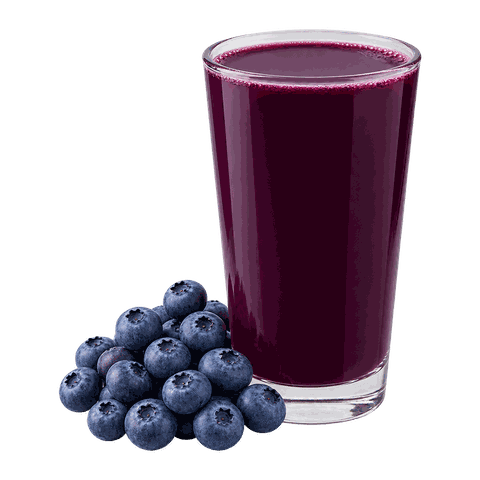
36Blueberry Juice
Ingredients
- Blueberry
Directions
- Best freshly juiced. Bottled juice from a good health food store also works.
37Cantaloupe Juice

Ingredients
- Cantaloupe
Directions
- Best freshly juiced. Bottled juice from a good health food store also works.
38Cherry Juice

Ingredients
- Cherry
Directions
- Best freshly juiced. Bottled juice from a good health food store also works.
39Cranberry Juice

Ingredients
- Cranberry
Directions
- Best freshly juiced. Bottled juice from a good health food store also works.
Best used unsweetened.
40Grape Juice

Ingredients
- Grape
Directions
- Best freshly juiced. Bottled juice from a good health food store also works.
41Grapefruit Juice

Ingredients
- Grapefruit
Directions
- Best freshly juiced. Bottled juice from a good health food store also works.
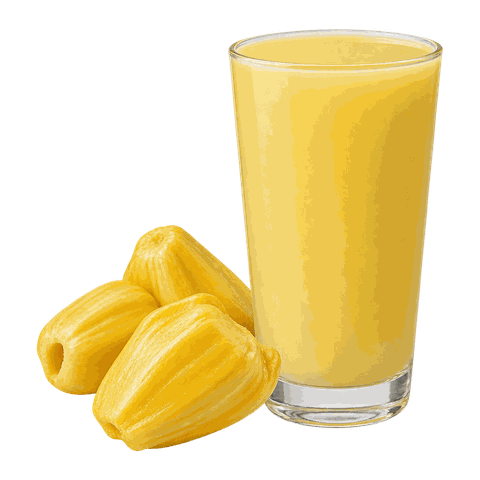
42Jackfruit Juice
Ingredients
- Jackfruit
Directions
- Best freshly juiced. Bottled juice from a good health food store also works.
43Kiwi Juice

Ingredients
- Kiwi
Directions
- Best freshly juiced. Bottled juice from a good health food store also works.
44Lemon Juice

Ingredients
- Lemon
Directions
- Best freshly juiced. Bottled juice from a good health food store also works.
45Lime Juice

Ingredients
- Lime
Directions
- Best freshly juiced. Bottled juice from a good health food store also works.
Less acidic than lemon.
46Mango Juice

Ingredients
- Mango
Directions
- Best freshly juiced. Bottled juice from a good health food store also works.
47Nectarine Juice

Ingredients
- Nectarine
Directions
- Best freshly juiced. Bottled juice from a good health food store also works.
48Orange Juice

Ingredients
- Orange
Directions
- Best freshly juiced. Bottled juice from a good health food store also works.
49Papaya Juice

Ingredients
- Papaya
Directions
- Best freshly juiced. Bottled juice from a good health food store also works.
50Peach Juice

Ingredients
- Peach
Directions
- Best freshly juiced. Bottled juice from a good health food store also works.
51Pear Juice

Ingredients
- Pear
Directions
- Best freshly juiced. Bottled juice from a good health food store also works.
52Pineapple Juice

Ingredients
- Pineapple
Directions
- Best freshly juiced. Bottled juice from a good health food store also works.
53Pomegranate Juice

Ingredients
- Pomegranate
Directions
- Best freshly juiced. Bottled juice from a good health food store also works.
54Plum Juice

Ingredients
- Plum
Directions
- Best freshly juiced. Bottled juice from a good health food store also works.
55Prune Juice

Ingredients
- Prune
Directions
- Best freshly juiced. Bottled juice from a good health food store also works.
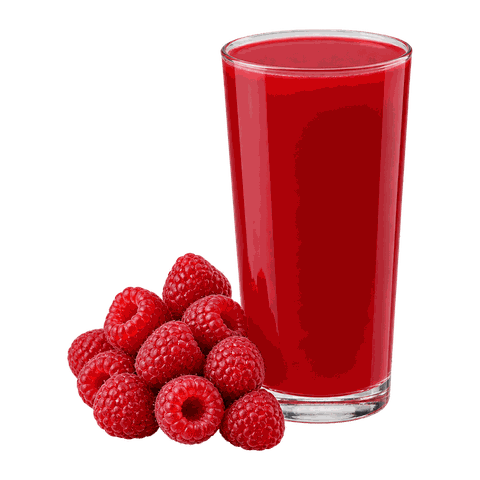
56Raspberry Juice
Ingredients
- Raspberry
Directions
- Best freshly juiced. Bottled juice from a good health food store also works.
Very astringent.
57Strawberry Juice

Ingredients
- Strawberry
Directions
- Best freshly juiced. Bottled juice from a good health food store also works.
58Tomato Juice

Ingredients
- Tomato
Directions
- Best freshly juiced. Bottled juice from a good health food store also works.
Botanically a fruit, not a vegetable.


No recipe matches that search.
Capsules or liquid?
Same herbs, same schedule. The difference is how you take it and how you store it.
| Detail | Capsules | Liquid |
|---|---|---|
| Per formula | 100 vegan capsules | 2 fl oz (59 mL) dropper bottle |
| Per dose | 5 capsules | 1 to 2 squeezes of the dropper |
| Taken with | 8 oz of water | 2 oz of water, then 8 oz of water |
| Activated charcoal | 1/3 teaspoon in 4 oz of water | 1/2 teaspoon in 4 oz of water |
| Base | Plant capsule, nothing added | Vegetable glycerin and distilled water, alcohol-free |
| Storage | Cool, dry place, no refrigeration | Refrigerate before and after opening, use within 60 days |
| Travel | Easy to pack | Needs to stay cold |
| Price | $75.00 | $75.00 |
The first cleanse to include activated charcoal.
Included since 1999. Our charcoal is food grade, steam-activated from coconut shell: a tasteless, odorless, very porous powder taken with Formula 6 or before bed. Not to be confused with the briquettes used for grilling.

The cleanse that set the standard.
Formulated by master herbalist Djehuty Ma'at-Ra, the Full Body Detox was the first twenty-day, six-formula cleanse on the market and has sold hundreds of thousands of units worldwide. FBD Outlet is Divine Medicinals' own outlet for the whole Full Body Detox range, every product 25% below its divinemedicinals.com list price.
What is not in the bottle matters too.
Formulated for Divine Medicinals. Vegan capsules with no stearic acid, silica, titanium dioxide or other excipients.
Detox Troubleshooter
Please attempt to locate your particular healing crisis for understanding on what’s going on with and inside your body before contacting us with health inquiries. There is no need to fear or be afraid in response to abnormal reactions with your body when detoxifying and cleansing it.
Questions? Call (800) 455-7017
Showing 53 / 53
A
Acid Reflux
A sign that the digestive tract is too acidic; denotes a battle between acid and alkaline in the digestive tract; a natural reaction to the alkaline nature of the herbs; a sign that cleansing and healing is taking place; also denotes a problematic stomach which needs attention.
B
Bleeding
A form of eliminating and cleansing just like the female menstrual cycle; a form of blood-letting!
Bloating
Gas pockets in the colon are dissolving; a sign of extreme gaseous activity taking place in the colon; a sign of serious blockage due to constipation.
Blood Clots
Denotes elimination of old endometrium lining shredding clogged in the vaginal tract. See Post-Menses Discharge!
Bloody Stools
Not a good or healthy sign! Usually denotes internal bleeding or hemorrhaging in the colon (or ulcers). Juice and drink plenty of cabbage juice (4 oz) daily.
Bloody Urine
Not a good or healthy sign! Usually denotes prostate problems or cancer! Could also denote a tumor being dissolved and released via the urinary tract! If the bleeding is excessive (with every urination) the problem is serious; if sporadic or rare, just a sign of cleansing.
Body Odor
A sign that the colon is being cleansed and toxic fumes are being released via the pores of the skin; drink plenty of chlorophyll or parsley and cilantro juice and/or deep breathing (yoga).
Bubbles in the Stools
A good and healthy sign! Denotes oxygenation from eating raw and living foods while detoxifying.
Bubbles in the Urine
A sign of extreme acidosis and protein if the urine is yellow-orange in color; if the urine is clear, a good sign of elimination.
Bumps (or Pimples, Blisters)
A sign that the body is eliminating toxins and parasites and worms via the skin; a sign that the blood is very toxic. Facial steaming (tinting) is helpful; clean the skin with witch hazel or hydrogen peroxide (oxygen). Bumps, pimples, or blisters in the genital area denotes toxicity and lack of oxygen. Eat/juice more green foods!
Burning or Warm Sensation in the Chest
A sign of heat (from Formula #2) in the chest; denotes too much acid (mucus) in the chest area (lungs); denotes improved circulation in the chest area
Burning Sensation in the Throat
A sign that the throat is inflamed due to compromised mucus membrane area; mucus and toxic lymph congestion in the throat area of the mucus membranes.
C
Clear Urine
A good sign! Denotes that the body is presently alkaline and being thoroughly cleansed. Urine is naturally clear!
Cold and Flu-Like Symptoms
A sign that the body’s defense (immune) system is taxed and greatly toxic; a sign that cleansing is taking place.
Coughing
A natural body function; a sign that the lungs are attempting to expectorate dissolved mucus via the mouth.
Cramping
Gas pockets in the colon are being released. See Spasm.
D
Dandruff
Denotes dried mucus (boogers) being eliminated externally in the head area; a sign of too much mucus in the head area; wash the head/hair with a pH balanced shampoo and lubricate with olive oil (or Amla hair oil).
Dark Colored Stools
Nothing but years old fecal matter that has been stuck in the colon for many years and finally being released due to detoxifying the body; a sign that cleansing and healing is taking place in the colon.
Diarrhea
A sign of serious fecal compaction in the colon. The body is taking water from the tissues and sending it to the colon to soften the hardened fecal matter. Drink plenty of water and add a half teaspoon of sea salt to the water to replace the lost sodium in the body.
E
Ear Pain
A sign of fluidic buildup in the ear canal and/or sinus passage; denotes fluid being dissolved in the head area. Ear coning or candling may offer relief.
Enhanced Libido
A sign of improved circulation throughout the body, mainly to the genital region.
Excessive Urination
A sign that the body is greatly releasing fluid buildup from the kidneys; a sign of too much protein in the urine.
F
Failure to Lose Weight
Denotes serious fecal matter buildup in the colon; also due to psychological reasons (inability to let go or release the burdens or weight of life); malfunctioning thyroid gland (lack of iodine); poor elimination.
Fatigue
See Lethargy.
Fever
Though rare, denotes the body heating up so as to cause perspiration which is a form of eliminating via the skin; cold baths help a fever but do not stop it. See Perspiration.
Flatulence
A sign that gas pockets in the colon are being dissolved. See Bloating and Spasms.
Floating Stools
A good and healthy sign! Denotes alkalinity in the body due to the consumption of raw and living foods. See Bubbles in the Stools.
G
Gas
See Flatulence.
Green Stools
Colon releasing old fecal matter. Green stools are the result of bitter gall fluid released in response to eating very acidic things eaten a long time ago; a sign of poor digestion.
H
Halitosis
A sign that the colon is greatly toxic and that the colon is being cleansed and the fumes are being released via the mouth which is a part of the eliminative-digestive tract. See Body Odor and follow pointers given.
Headache
Blood is thinning and purifying itself of impurities. Fluid in the head area is being dissolved and pressing against myofacial nerves. See Sinus Pressure.
Heartburn
See Acid Reflux. 21
Hunger
Constant hunger while detoxifying is mainly psychological – an upset colon dictating to the mind of the brain; a sign that nutrition (more minerals) is needed for the cleansing process. Simply eat more of the raw foods you like in addition to drinking more water.
I
Itching
A sign that the body is eliminating via the skin and that the blood is extremely acidic (which causes the itching). Use topical calendula cream on the itching area.
L
Lack of Defecating
A sign of serious constipation and compaction in the colon; denotes weakened peristalsis (colon muscular activity or contractions that causes bowel movement). Drink plenty of prune juice or senna tea and perform enemas (or get a professional colonic) to help.
Lethargy
A sign that the body is greatly taxed due to being toxic.
M
Mucus in or on the Stools
A good and healthy sign! Denotes the elimination of mucus via the colon.
P
Pain
Mainly due to spasms and pressure against bodily nerves or meridians; a sign of acidosis.
Perspiration
A sign of bodily elimination via the skin; a sign that the internal eliminative channels are taxed and sluggish; represents a good sign and natural function of the body’s intelligence.
Poor Appetite
A sign that the stomach and colon are shrinking back to its normal size – a good sign!
Post-Menses Discharge
A secondary menstrual period; as menstruation itself is a cleansing function, a secondary menstrual cycle while detoxifying is a sign of the body releasing toxins via the female vaginal tract. Dark blood denotes serious toxicity (and anemia) – a very unhealthy sign; light colored blood is a sign of good to moderate health. See Vaginal Discharge.
Puffy Eyes
Denotes fluid pressure buildup in the eye area; a sign of fluid buildup dissolving in the head area and being released; denotes cleansing activity in the kidneys.
R
Rash on the Skin
A sign that the body is eliminating via the skin; a sign that the blood is toxic; denotes the blood being purified.
Red Eyes
Denotes serious cleansing activity taking place in the liver; a sign that the liver is greatly toxic and needs attention. Drink milk thistle or dandelion root tea.
Runny Nose
Dissolving mucus in the respiratory tract and/or sinuses being released via the nostrils; fluid buildup in the head area being dissolved and eliminated via the nose.
S
Sex (Low Drive)
Body Intelligence is using energy for healing and cleansing; libido is placed on the back-burner.
Sinus Drain
A sign that mucus is dissolving in the head area and respiratory tract and being released via the nostrils. See Runny Nose.
Sinus Pressure
A sign that fluid congestion is breaking down and about to be released; pressure is caused by fluid pressing against myofacial nerves.
Sluggish
See Lethargy.
Spasm
Gas pockets in the colon are being released; involuntary muscle contraction of sudden onset initiated by the dissolution of gas pockets. See Cramping.
T
Tearing, crying
Detoxifying via the lachrymal glands; emotional releasing.
V
Vaginal Discharge
Mucus being eliminated via the vaginal tract; a sign that the body’s other eliminative channels (colon, kidneys, lungs, liver, and skin) are blocked; a sign of excess mucus in the female reproductive channel being released.
Vomiting
Although rare, denotes elimination via the mouth; a sign that the body is too acidic and that the colon is too taxed to expel via the rectum; a natural reaction to the alkalinity of the herbs.
Nothing matches that search.
Questions, answered.
Who should not do the Full Body Detox?
It is not recommended during pregnancy or breastfeeding, or for anyone taking prescription medication. The adult program is not recommended for children; the Children's Full Body Detox is the version made for them. Pause other supplements, vitamins and cleanses until the twenty days are complete. If you have a health condition, talk with your healthcare provider first.
What can I expect in the first few days?
Some people feel tired, headachy or low for a few days as they cut coffee, sugar and processed food and shift to raw meals. Drink plenty of water and rest. If you feel unwell in a way that concerns you, stop and speak with your healthcare provider. The troubleshooting guide above has the founder's practical tips.
Do I have to eat raw for all twenty days?
The program is built around raw fruit, vegetables, nuts, seeds and sprouted grains. In fall and winter you can add hot soups, vegetable broth, brown or wild rice and steamed vegetables. Fresh-pressed juice and herbal tea are encouraged throughout.
What should I eat after the twenty days?
It is a good time to keep the better eating habits you started. The raw recipes above work just as well after the program.
Capsules or liquid, which should I choose?
They contain the same six formulas. Capsules need no refrigeration and travel easily. The liquid is alcohol-free extract in vegetable glycerin for anyone who prefers not to swallow pills; keep it refrigerated and use it within 60 days.
How is the liquid stored?
Keep it refrigerated before and after opening and use it within 60 days of purchase. Capsules store at room temperature in a cool, dry place.
How often can I cleanse?
Many people cleanse at each change of season, one to four times a year. Complete the full twenty days before starting another cleanse or regimen.
Can I take fewer capsules per dose?
The program uses 5 capsules of each formula. You are free to take a smaller dose you are comfortable with, such as 2 to 3 capsules; the bottles simply last longer and the program takes longer to finish.
Is this the same Full Body Detox sold by Divine Medicinals?
Yes. FBD Outlet is Divine Medicinals' own outlet store for the Full Body Detox family: the same products, from the same maker, formulated by master herbalist Djehuty Ma'at-Ra in November 1999.
Why is it cheaper here than on divinemedicinals.com?
This is the outlet. Every Full Body Detox product is sold here at 25% below its divinemedicinals.com list price, and the list price is shown beside the outlet price so you can see the difference.
What else is in the range?
Besides the capsules and the liquid: a Children's Full Body Detox in liquid form, the Full Body Detox loose-leaf tea, bath drops for the tub, and a skin clay. The tea, bath drops and clay are companions to the cleanse, not replacements for the six formulas.
How does shipping work?
Orders ship within 24-48 hours by USPS with tracking. Shipping is a flat $10 anywhere in the United States; we do not ship internationally. Cleanse kits ship with their bottles in a sealed zipper bag that protects against spillage.